

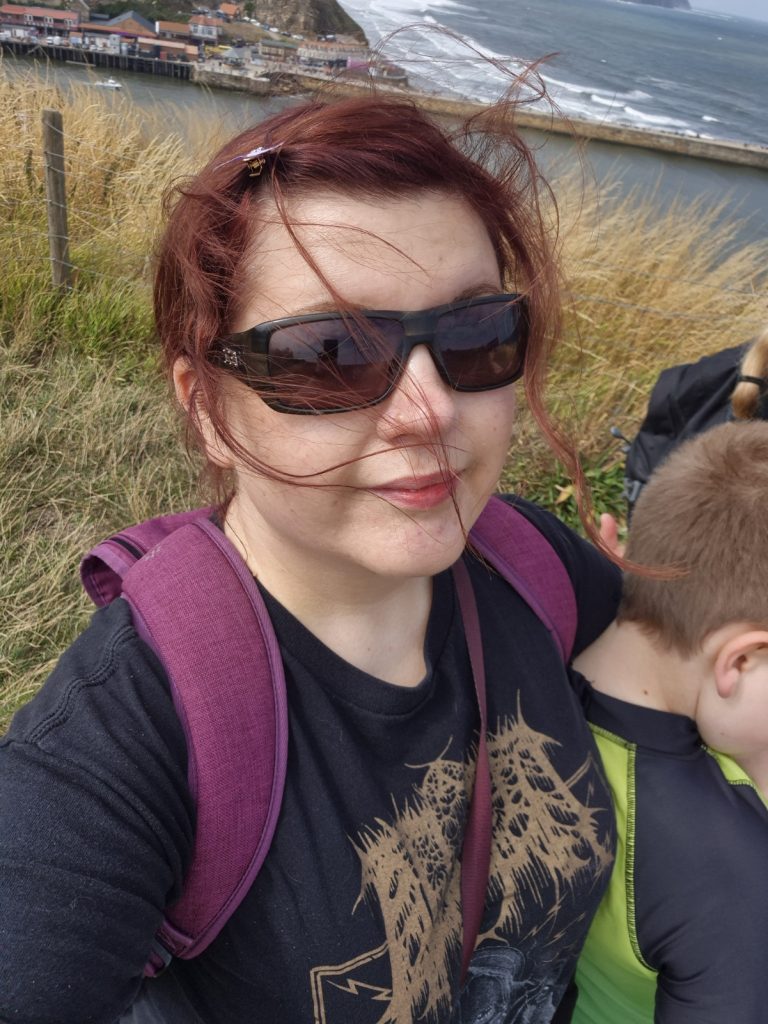
We recently spent a weekend in North Yorkshire as a family. We had a lovely time! We explored York and Whitby, went to the beach, ate out, discovered places we hadn’t planned to visit and came home with some brilliant memories. Being the reflective soul I am, amongst all of that, I noticed something.
A lot of my work involves helping other people understand what works for them. I share examples of things I’ve explored with clients, strategies we’ve developed together and observations I’ve made about neurodivergent experiences. But I rarely stop and think about all the strategies and accommodations I use in my own life.
Partly, I think, because I don’t always notice them.
When you’ve spent your whole life experiencing the world through your own brain, and gradually built ways of doing things that make life easier, you don’t necessarily think, “I’m making an adjustment for my neurodivergence here.”
You just… do the thing that works.
And it turns out that taking a neurodivergent family away from their familiar environment for a weekend is a very good way of making some of those invisible adjustments suddenly much more visible.
As a neurodivergent family, we make a lot of adjustments.
Not necessarily the sort we sit down and formally identify as reasonable adjustments. They’re simply things we’ve learned to do because they make life work for our family. Sometimes, it takes leaving your usual environment to realise just how many of them there are! I’ve broken this down into 10 parts for your reading pleasure below, are there any adjustments you have noticed that help you, your colleagues, family members or friends manage in different environments?
1. The planning starts before we’ve even left
Before a trip, I can feel anxious about the unknowns.
I want to know not just where we’re going, but how long will it take? What are we doing when we arrive? What’s happening afterwards? What if that doesn’t work?
My wonderful husband tends to take responsibility for planning all of this. There are plans. There are backup plans for the plans. It’s only relatively recently that I’ve recognised just how important that predictability is to me. Of course, travelling as a neurodivergent family also teaches you that even meticulously constructed plans and backup plans don’t guarantee that things will actually go to plan, and this particular weekend gave us an excellent example before we’d even left home.
2. When the backup plan needs a backup plan
The day before we travelled, the owner of our Airbnb contacted us to explain that there was a problem with Virgin Media in the area and the property currently had no Wi-Fi. OK, nobody’s fault, nothing we could do about it.
The thing is, Wi-Fi isn’t simply a nice holiday extra for our family. Our children (and to be fair, the grownups too) use their devices as one of the ways they regulate, particularly during downtime and transitions. We also use streaming services such as Netflix, so suddenly something we’d assumed would be available wasn’t.
Okay. New plan.
We downloaded things in advance – problem solved…
….except when we arrived, we discovered we couldn’t access the back of the television to connect my husband’s laptop containing everything we’d carefully downloaded, so the backup plan didn’t work either! Sometimes you can anticipate a difficulty, make an adjustment and still discover that circumstances have other ideas. That’s perhaps an important part of planning for us.
The aim isn’t to construct such a perfect plan that nothing unexpected can ever happen. We plan because predictability helps. Then, when reality inevitably deviates from the plan, we work out what we can do next.
3. Sometimes things are just inconvenient
We also arrived to discover that we didn’t have hot water.
This became particularly relevant after a trip to the beach when everyone needed to rinse off and the water was… let’s generously describe it as possibly lukewarm. (Either way – it wasn’t pleasant.) Thankfully, by the following morning we’d spoken to the owner, who explained what we needed to do, and the problem was sorted.
Now, I think it’s important not to attribute absolutely everything to neurodivergence here. Arriving at holiday accommodation with no Wi-Fi and no hot water would be frustrating for plenty of people, regardless of neurotype. However that doesn’t take away from the fact that unexpected problems do add another demand when you’re already navigating an unfamiliar environment. But we still dealt with them, we adapted and the weekend continued. That’s important too.
4. Taking pieces of home with us
I’ve accepted that I probably won’t sleep as well somewhere unfamiliar.
Different bed. Different sounds. Different surroundings. My brain notices them, so I take things that allow me to recreate parts of my usual bedtime routine. I take my Snoozeband so I can listen to white noise rather than having to process every unfamiliar sound around me. I have my Kindle, so I can read before sleeping just as I would at home. They’re small things, and don’t rely on rearranging the whole sleeping environment whenever I stay somewhere else.
I wouldn’t necessarily have described them as “adjustments” in the past, just things I pack….but that’s exactly the point.
When you’ve spent years learning what helps your brain, sometimes you stop noticing that you’re accommodating yourself.
5. “They have chips” doesn’t necessarily mean there is something to eat
Food requires another layer of planning. I don’t personally have many food restrictions, but one of my children has a very limited range of foods they can eat.
During our trip, we went into a pub in York where chips were available. Great! Chips are something they eat…..except these chips had been seasoned differently so my son couldn’t eat them. That meant adapting the plan again. Once we’d eaten, finding somewhere we could get something they could eat became the priority. We ended up at a Co-op buying crisps and fruit before moving on with the rest of our day.
Nobody had done anything wrong – the pub hadn’t done anything wrong by seasoning its chips. My child wasn’t being difficult by being unable to eat them. It simply reminded me that “there’ll be something they eat” isn’t something we can take for granted.
A familiar food isn’t always familiar when somebody else prepares it.
6. Managing transitions – even between enjoyable things
Then there are transitions!
Sometimes somebody is particularly focused on one part of the trip – going to the beach, for example. That can mean lots of explaining, reminding and reassuring:
Yes, we’re still going.
No, the fact that we’re doing this first doesn’t mean we’re not going.
Yes, the beach is still part of the plan.
When you’re looking forward to something intensely, everything that has to happen before it can feel like an obstacle. Again, this isn’t something I necessarily think of as a formal strategy when we’re doing it. It’s simply how we’ve learned to communicate with each other.
7. Sometimes everyone’s sensory needs are different
Being away also means spending time in environments we can’t control.
On Saturday evening we ate somewhere that was very loud. There was music playing alongside lots of people talking. I eventually put my Loop earplugs in, the children had tablets and headphones and I could see that my husband was uncomfortable with the noise too. Four neurodivergent people can be sitting in exactly the same environment and experiencing it differently. What helps one person won’t necessarily help another.
So sometimes family life involves everyone regulating in their own way, at the same time. and sometimes our needs actively conflict.
8. When the adjustment is simply changing the seating plan
That happened in the car too! Two children sitting together for a long journey can, unsurprisingly, start irritating each other. So on the journey home we changed things – I sat in the back with one of the children. Nothing particularly sophisticated happened. We simply recognised that the existing arrangement wasn’t working particularly well and changed the environment, and perhaps that’s one of the biggest things I’ve realised. If something isn’t working, we don’t have to persevere.
9. We don’t always recognise our own adjustments
When you’re neurodivergent and you’ve spent years living as a neurodivergent person (whether you knew you were or not), you don’t necessarily know which parts of your life are different as you’ve only ever experienced your own brain.
When you’re a neurodivergent family, you gradually build an entire family environment around everybody’s needs.
- You buy particular foods.
- You carry headphones and earplugs.
- You make sure devices are available for regulation.
- You rely on familiar routines.
- You download things when the Wi-Fi disappears.
- You plan journeys.
- You explain transitions.
- You know who needs warning about change.
- You know when somebody needs space.
- You know which battles aren’t worth having.
- You rearrange where people sit.
- You bring familiar things into unfamiliar places.
- You have backup plans (and, apparently, sometimes you need backup plans for your backup plans).
After a while, none of that feels remarkable – it’s just life! Going somewhere unfamiliar temporarily removes some of the environment you’ve built around yourselves. Suddenly the things you normally do without thinking become much more visible. It made me wonder how often we see someone managing well without recognising all the things they’re doing to make that possible. They’re not necessarily managing despite their needs; they may be managing because they’ve become very good at recognising and meeting them.
10. Adaptation doesn’t mean everything went wrong
I think this is important because there’s a danger that listing all these adjustments makes our weekend sound difficult – it wasn’t! In fact, NOT making them would have made it not just difficult but nigh on impossible. There were challenges, there were unexpected changes, there were things that didn’t work – and we adapted. Actually, that’s part of what a successful trip looks like for us. Success isn’t everybody coping perfectly with whatever environment we happen to put ourselves in, it’s noticing when something isn’t working and being willing to change it.
- Sometimes that’s putting earplugs in.
- Sometimes it’s finding different food.
- Sometimes it’s changing seats.
- Sometimes it’s abandoning the backup plan and working out Plan C.
- Sometimes, it’s accepting that you’re going to rinse the sand off yourself in absolutely freezing water and complain about it because, neurodivergent or not, nobody wants that.
Finally: A successful holiday doesn’t have to mean doing everything
There were some genuinely wonderful moments; we went to the beach, we explored, we ate out. On the way back from Whitby towards York, we decided to take a longer route and unexpectedly came across Byland Abbey. We hadn’t planned to go there, we didn’t even know it was there! But it was so beautiful that we slowed down, stopped and took photographs.
There’s something I quite like about that after everything I’ve just written about my love of plans. Sometimes predictability makes experiences accessible, sometimes changing the plan makes things manageable. Sometimes, the completely unplanned thing turns out to be one of the lovely parts. Perhaps that’s the bit I’m taking away from our weekend.
Supporting neurodivergent people isn’t always about finding some impressive new strategy. It includes noticing the small things that already help and giving ourselves permission to keep doing them. It’s recognising that somebody who appears to be coping may already be doing an enormous amount of work to make that possible.
Importantly, it’s remembering that making adjustments doesn’t mean something has gone wrong. Sometimes those adjustments are exactly what allow us to get on with enjoying ourselves.
Even when there’s no Wi-Fi.
Or hot water.